I was nearly five the first time I learned that words could make people disappear.
It was a beautiful spring evening in 1974, an ordinary weekday in our apartment in Yerevan. My grandmother and I sat at the small table on our fourth-floor balcony watching our neighbors on the street below go about their evening rituals, some children still playing outside by the mulberry tree. The scent of Armenian coffee was thick in the air as my grandmother sipped from her cup and told me a story about a brave girl who challenged a cruel king—when my mother stepped out from the kitchen. Her hand landed on my grandmother’s shoulder. Firm. A small shake of her head.
The story stopped mid-sentence, my grandmother’s unsaid words hanging in the air like the warm haze rising from her coffee.
“You’re outside,” my mother whispered. “Someone might hear.”
Later that night, after I’d gone to bed and pretended to be asleep, hushed voices drifted through the thin walls of our apartment. My parents. My grandmother.
“Neighbor’s entire family…disappeared…Siberia.”
I couldn’t make out all the words, but I understood the tone. Fear has a sound all its own.
I never heard the end of that story. And I learned not to ask for it.
This is what oppression does. It doesn’t just silence bold declarations against a regime. It silences the stories too. The fairy tales. The “what ifs” and “once upon a times.” Because those in power understand something fundamental: stories can be dangerous. They make people think. They plant seeds that grow into forests of resistance, introduce ideas that might topple kingdoms.
My grandmother knew this. Every story she whispered to me was an act of quiet defiance, a way of preserving our culture when speaking too freely about the present could cost everything. She’d been through things no human should experience, lived through horrors I’m only now beginning to understand as an adult. The folktales and myths she shared weren’t just entertainment or simple moral lessons. They were survival. They were memory. They were truth wrapped in metaphor, passed down through generations who understood that sometimes the only safe way to speak is through the whispered voices of imagined characters who dwelled in non-existent kingdoms.
Those hushed stories taught me something essential: fiction isn’t always separate from truth. It’s one of the deepest ways we have of telling it, of speaking about oppression, preserving culture, and finding ways to survive when survival itself might be an act of defiance.
Now, decades later and an ocean away, I sit at my own desk, writing fantasy novels about magical kingdoms and young women finding their voices. I’m free to write whatever I want, to publish it, to share it with the world. And yet, I still carry my grandmother’s lessons with me. A small part of me still remembers what it costs to speak freely. Still see my mother’s hand on my grandmother’s shoulder, the silent warning to be cautious.
When I created the world of Light Weaver, with its outlawed magic, its secret society, its tyrant king who controls through fear, I wasn’t just building a fantasy world for entertainment. I was drawing from something real. The Golden King who silences Light Weavers and rewrites history is built from the bones of every authoritarian regime that tried to control which stories could be told. My protagonist Satya’s journey to reclaim her voice and her power is my grandmother’s journey. My mother’s journey. The journey of every generation stretching back for thousands of years who had to choose between silence and speaking truth.
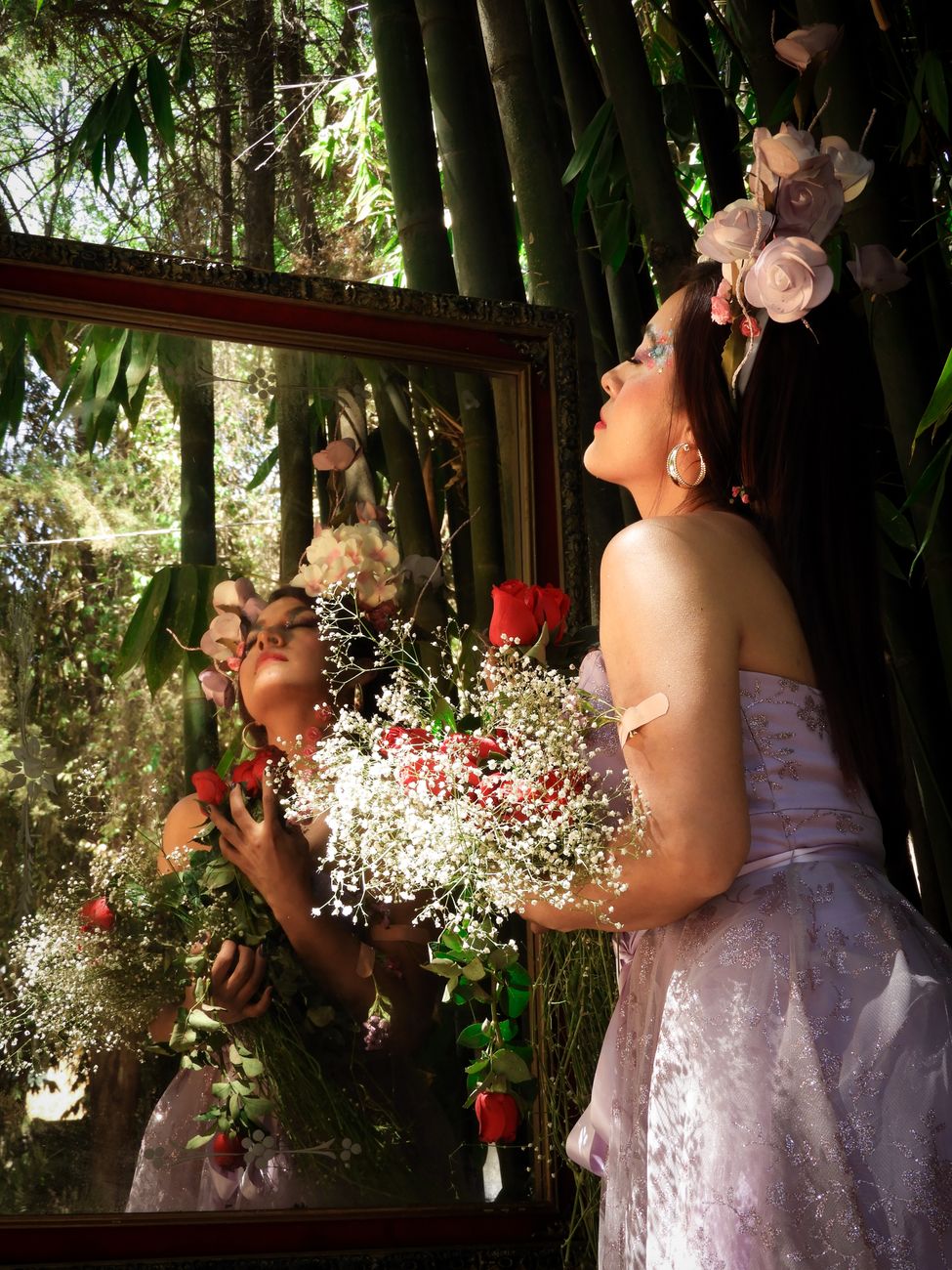
Fantasy kingdoms aren’t escapism. They’re mirrors held up to our own world, reflecting past, present and potential futures. They’re metaphorical warnings. When I write about oppression and resistance in a magical realm, I’m asking questions about power that might feel too raw, too close, too dangerous to ask directly. Fiction gives us the distance we need to examine difficult truths. Truths that are as real as the fear I heard in those hushed voices that night in Yerevan, as real as my grandmother’s voice telling the unfinished tale of a brave girl who stood up against a tyrant king.
This is why writers matter. Why storytellers have always mattered. We ask the questions that make people uncomfortable. We create worlds where readers can safely explore what happens when power goes unchecked, when voices are silenced, when fear becomes a tool of control. And in doing so, we help readers recognize those patterns in their own world.
When I hold up a mirror to my own stories, I finally know how the story ends—the one about the brave girl who stood up to a tyrant king. She finds her voice. She speaks her truth. She refuses to disappear. Maybe, in my own small way, Light Weaver is the ending to that story I’ve carried with me for decades until I could put it into words. And my next novel will do the same. And the next. And the next…
 lusinetorossian.com