Armenian Coffee Divination Across Generations
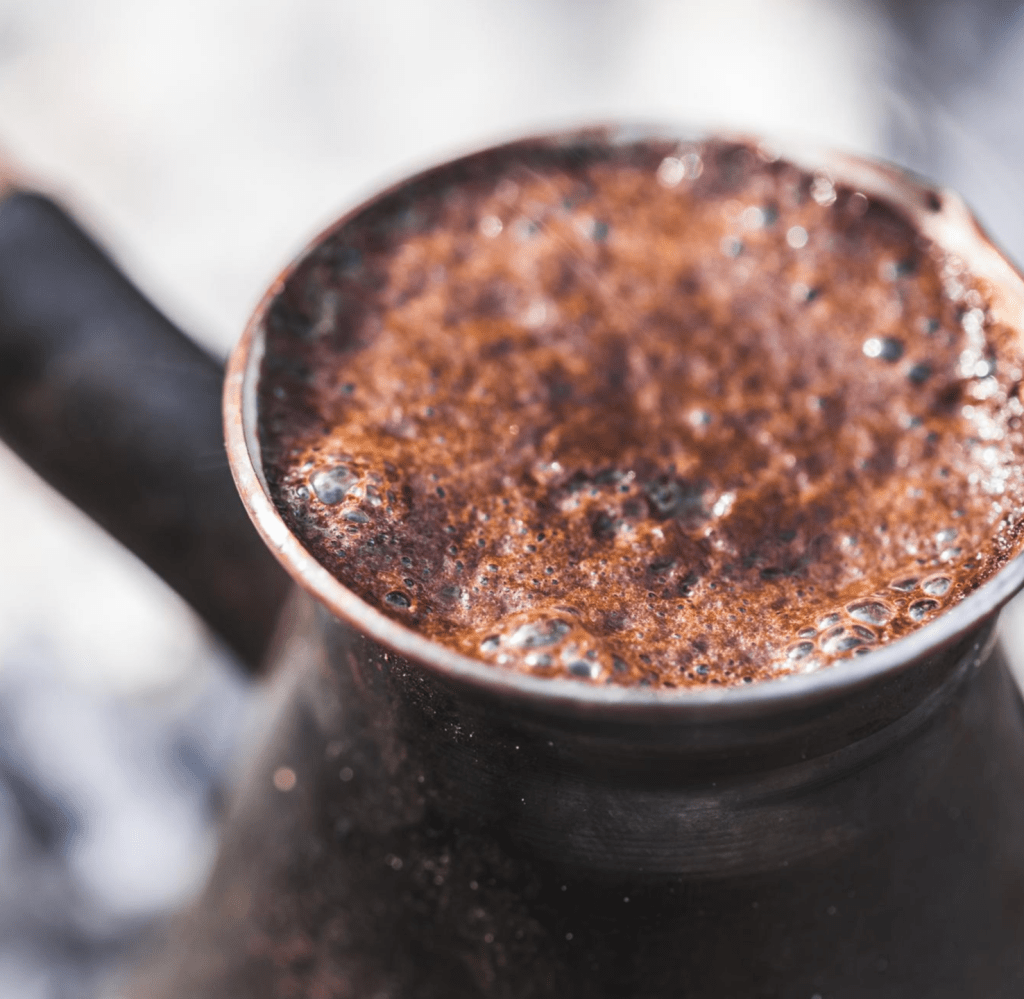
The memory is as clear as yesterday. The dark grounds swirl at the bottom of my cup as I brush a thumb over them, just as my mother taught me. Our kitchen is filled with the rich aroma of Armenian coffee, that distinctive scent that has always meant home, comfort, and moments of connection. I turn the cup over onto the saucer, and wait. Finally, my mother picks up my cup, places her reading glasses over her nose, her movements practiced and sure, the same way her mother once held cups for readings.
“See here?” She turns the cup slowly, reading symbols and stories in the patterns left behind. “Everything will be well.” Her voice carries the same gentle certainty it had when I was a child, when a hug took away all my pains and worries. She points to where I’ve scraped the bottom of the cup with my thumb. There, the grounds have settled into a final symbol resembling a heart. “Look, you have a pure heart.”
In Armenian households across generations, coffee cup readings have created sacred spaces where mothers and daughters share more than just predictions – they share their hearts. The ritual transcends simple fortune-telling. It’s a bridge between generations, a moment when wisdom flows as freely as the coffee being poured.
Like many Armenian traditions, coffee cup reading is an art that blends technique with intuition. The process begins with the coffee itself—Armenian coffee, prepared thick enough to leave substantial grounds. The ritual that follows is both simple and complex: after drinking the coffee, the cup is covered with its saucer and turned seven times with intention (seven is an auspicious number for Armenians). Then it’s flipped upside down and left to rest, allowing the grounds to create their unique patterns along the cup’s white interior. Some readers let the cup rest for exactly seven minutes, others wait until the bottom feels cool to the touch. My mother always said it’s ready ‘when it felt right.’
The art of interpretation is equally nuanced. While there are common symbols—birds for news or messages, roads for journeys, hearts for love and self-reflection—each reader develops their own understanding of the patterns. My mother taught me to look not just for individual symbols, but for how they connect and flow into each other. “The cup tells a story,” she would say, “and like any good story, everything is connected.”
Long before I understood the symbols or learned to turn the cup just so, I watched my mother, grandmother, and aunts, perform readings for friends and family. Each session was its own ceremony: the careful preparation of Armenian coffee, thick and aromatic; the way they’d study the grounds with quiet concentration; how their interpretations always seemed to offer exactly what the seeker needed—whether guidance, comfort, or hope. This wasn’t really about seeing the future. It was about creating a space where worries could be voiced, dreams could be shared, and the reader could offer the seekers the kind of deeper understanding that comes wrapped in metaphor and symbol. Every reading was an excuse to sit, to talk, to listen to each other’s stories.
These intimate moments of divination found their way into my fiction. In my stories, magic isn’t just about power or spectacle. Like coffee cup reading, it’s about connection, intuition, and the sacred trust between teacher and
student, between author and reader.
When I write about the Sacreds in Light Weaver, their magic carries echoes of those quiet moments in my mother’s kitchen. The way they learn to read patterns in light and shadow mirrors how I learned to read patterns in coffee grounds—with patience, practice, and the gentle guidance of those who came before. Their power, like the art of cup reading, requires both technical skill and that ineffable quality my mother called “listening with your middle”—that inexplicable space between the heart and mind.
Now, as I teach my own daughters to turn the cup just so, to look for birds and hearts and journeys in the grounds, I feel the thread of this tradition stretching both backward and forward through time, connecting generations through coffee grounds and whispered wisdom.
 lusinetorossian.com